Key Components of a BESS: Battery, PCS, EMS and Transformer
A complete BESS is more than a battery. It combines a battery system, PCS, EMS, transformer, switchgear and protection, thermal management, fire safety and a cloud monitoring platform — all working together.
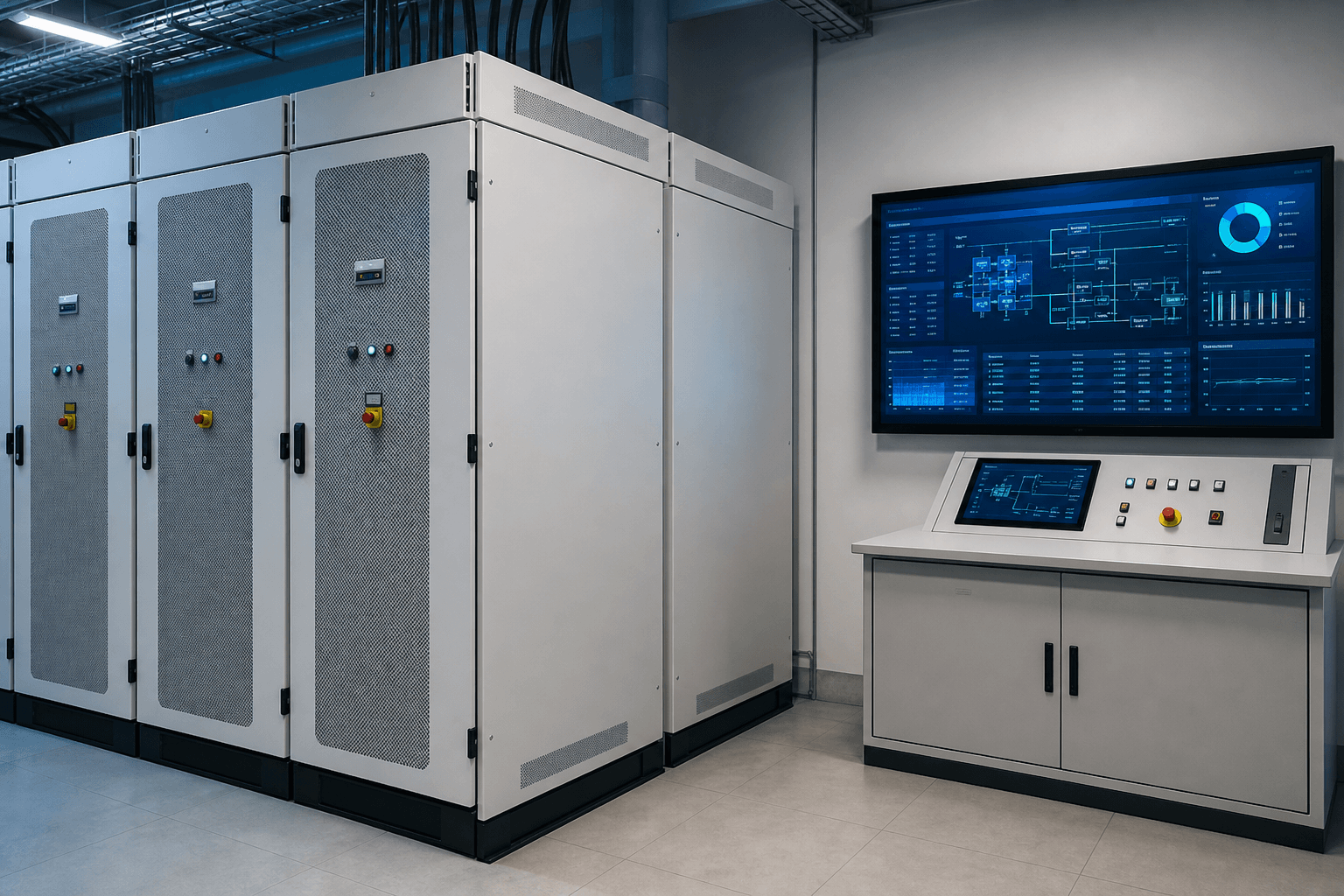
1. Battery system
The battery is the heart of the BESS, storing energy and releasing it when required. In commercial and utility-scale projects it is arranged in racks, cabinets or containers, with a Battery Management System (BMS) monitoring voltage, temperature, state of charge, state of health and safety protection. Battery quality is critical because it affects performance, safety, warranty, degradation and long-term return.
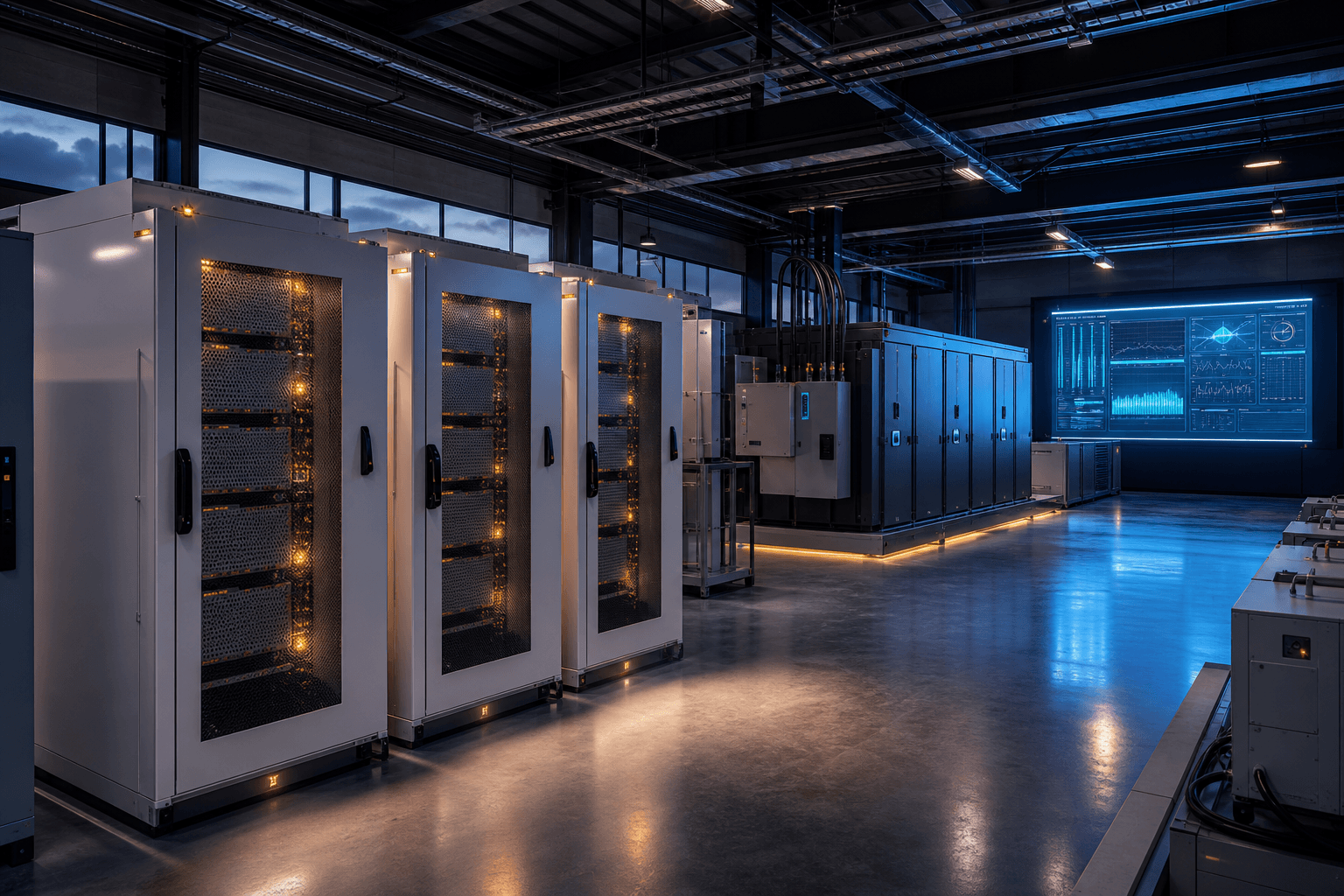
2. Power Conversion System (PCS)
Batteries store DC power; most buildings, factories and grids use AC. The PCS converts between DC and AC during charging and discharging, and helps control power flow, voltage, frequency and system response. A well-selected PCS improves efficiency, stability and performance.
3. Energy Management System (EMS)
The EMS is the brain of the BESS, controlling the operating strategy — when the battery charges and discharges and how it responds to site demand, solar generation or grid conditions. It supports peak shaving, solar self-consumption, load shifting, fault diagnostics, real-time monitoring, scheduling and energy optimisation. Without a good EMS, a BESS may not deliver its expected value.
4. Transformer
The transformer adjusts voltage levels so the BESS can connect properly to the site or grid. For commercial and utility-scale projects, voltage matching is essential because the battery and PCS may operate at a different voltage from the building, factory or grid connection.
5. Switchgear and protection
Switchgear and protection equipment safely connect, isolate and protect the BESS, including:
- Circuit breakers and relays
- Fuses and isolators
- Protection panels
- Metering systems
- Earthing systems
6, 7 & 8: Thermal, fire safety and cloud O&M
Batteries must operate within a safe temperature range, so the thermal management system (air or liquid cooling) controls temperature and prevents overheating — especially important in Malaysia’s hot, humid climate. A complete BESS also includes fire detection, suppression, ventilation and emergency shutdown. Finally, a cloud O&M platform allows remote monitoring of state of charge, state of health, temperature, PCS operation, energy throughput, alarms and performance trends — helping owners maintain uptime and long-term performance.
Frequently Asked Questions
The main components are the battery system, PCS, EMS, transformer, switchgear, thermal management, fire safety system and monitoring platform.
PCS converts electricity between DC and AC so the battery can charge and discharge properly.
EMS controls the charging, discharging, optimisation and monitoring strategy of the BESS.
A transformer adjusts voltage levels so the BESS can connect safely to the site or grid.
Related reading
Keep exploring — more from the Solunar Knowledge Centre:
Have a Solar + BESS project to discuss?
Solunar supports EPCC companies, developers and asset owners with technology, integration and O&M.