Power Expansion with BESS
Solunar helps businesses overcome power constraints by integrating Battery Energy Storage System (BESS), PCS, EMS and solar-ready infrastructure — supporting higher load demand, peak shaving, backup power and future expansion, without relying only on traditional grid upgrades.
Whether you are planning new production lines, EV chargers, data-centre loads, cold storage, automation or high-power equipment, Solunar provides a practical way to increase usable power capacity. More power. Better control. Faster deployment.
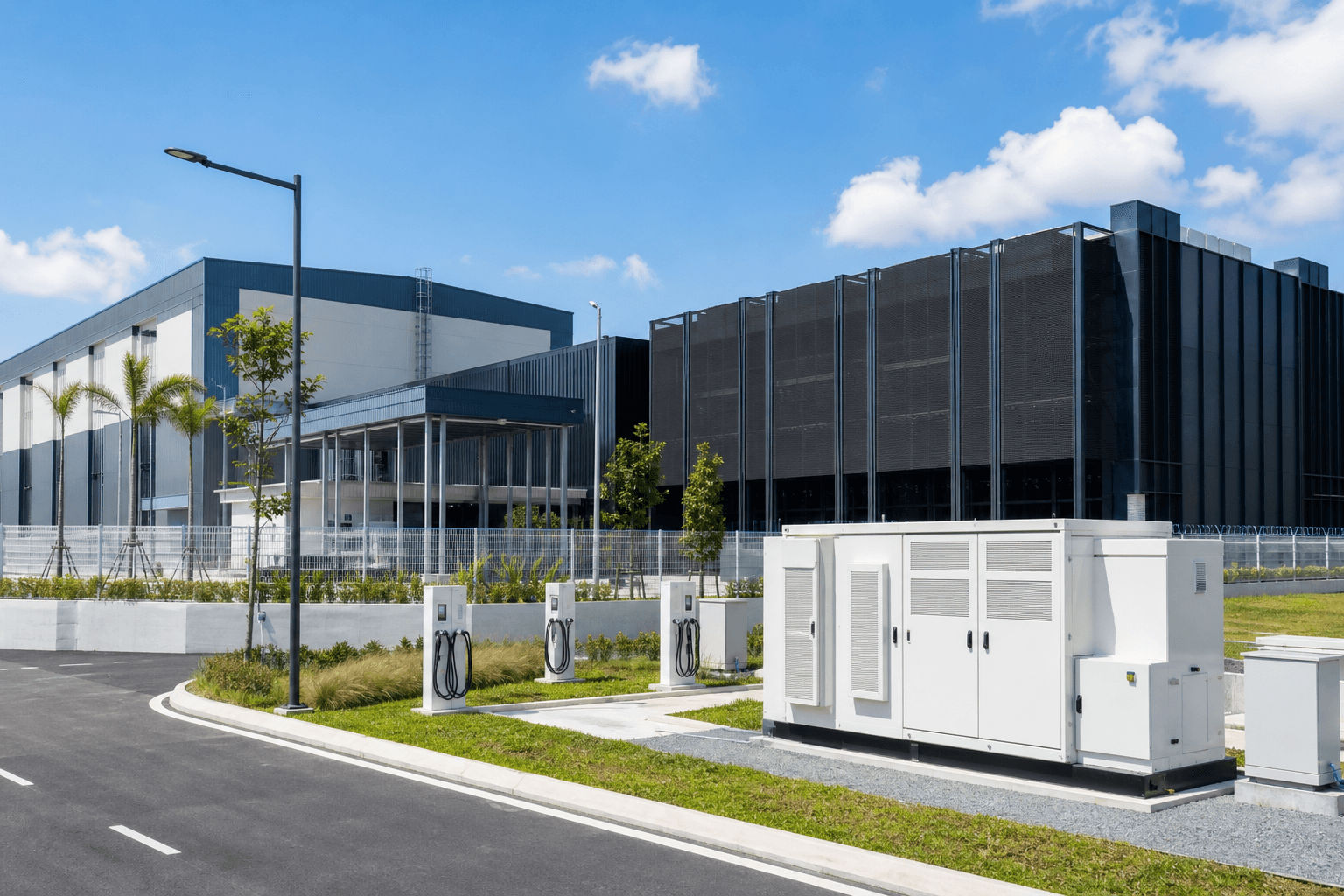
Your business needs more power — but the grid may not be ready
As Malaysia's industrial and commercial electricity demand grows, many factories, data centres, warehouses, logistics hubs and manufacturing plants face the same problem: they need more power, but the grid cannot always supply it fast enough.
For many businesses, power limitation is no longer just a technical issue — it has become a growth bottleneck that delays new machinery, new lines and new revenue.
Common power-expansion challenges
Getting additional supply from the grid can be slow, costly and uncertain. The recurring obstacles are:
Limited grid capacity
Many sites already run close to their approved capacity; the existing infrastructure cannot support extra load immediately.
Long waiting time for upgrades
Higher maximum demand or new incoming supply may need technical studies, transformer and cable upgrades, substation works and approvals.
High infrastructure cost
Transformers, switchgear, cabling, substations and civil works carry heavy capital cost — with uncertain payback.
Expansion gets delayed
Without power, new production lines, cold-room expansion, EV charging or automation simply wait.
Why traditional power expansion is no longer enough
The traditional fix is simple: apply for more grid capacity. But today that route is not always fast or flexible enough.
The better question is no longer "how do I wait for more power?" — it is "how do I store, manage and release power intelligently when I need it most?" That is exactly what a BESS enables.
How BESS supports power expansion
Battery storage works as an intelligent energy buffer alongside your grid connection:
More usable power, no immediate grid upgrade
If your supply limit is 2 MW but operations occasionally need 2.5 MW, the BESS can discharge the extra 500 kW during peaks — letting you run higher loads within the grid limit.
Support new machinery & lines
Provide extra power during machine start-up, peak-load operation and production ramp-up for compressors, CNC, moulding, cold rooms and automation.
Reduce maximum-demand charges
Discharging during peak periods lowers the highest recorded grid demand — peak shaving that cuts cost and frees headroom.
Protect existing infrastructure
Managing load flow and smoothing sudden spikes reduces stress on transformers, switchgear and distribution.
Faster to deploy than grid upgrades
An on-site BESS can often be deployed faster than utility-coordinated upgrades — a practical bridge while long-term enhancements are planned.
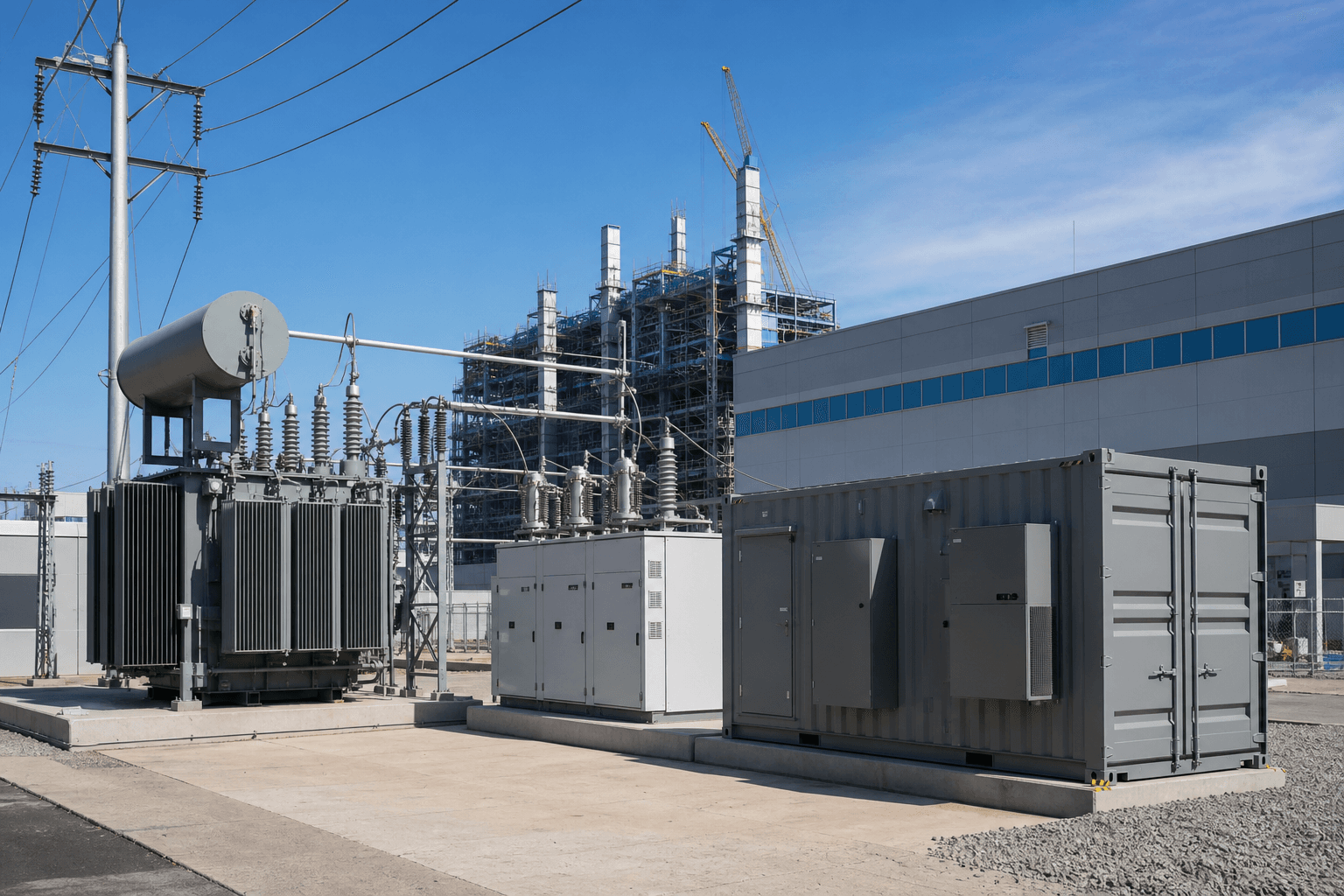
Who needs power expansion with BESS?
This solution suits businesses with growing electricity demand, including:
Manufacturing plants
Adding machines, production lines or automation.
Data centres
High reliability, peak support and energy scalability.
Logistics & cold storage
Large refrigeration loads, compressors and 24-hour operations.
EV charging hubs
High-power chargers where grid capacity is limited.
Commercial buildings & malls
Rising tenant demand, HVAC and electrification.
Industrial parks & developers
Flexible, reliable power infrastructure for tenants and LSS/CRESS projects.
Solunar's total solution
Solunar is not just a battery supplier — we deliver a complete, integrated BESS solution:
Battery Energy Storage
Commercial and utility-scale BESS for industrial and grid-connected applications.
Power Conversion (PCS)
Controls charge/discharge between battery, grid, solar PV and load.
Energy Management (EMS)
Monitors and automates energy flow by load, tariff and solar generation.
System integration
Engineering across BESS, solar, switchgear, transformer and grid connection.
Operation & maintenance
Monitoring, preventive maintenance and performance optimisation.
Solar-ready design
Works with existing or future solar PV for deeper savings and resilience.
Example: before and after BESS
Before: a factory has an approved grid capacity of 2 MW. New machines push peak demand to 2.5 MW — so expansion is delayed by slow, expensive grid upgrades.
After: Solunar designs a BESS to discharge during peaks. The grid still supplies up to 2 MW while the battery covers the extra demand. The factory expands now — with more usable power, better cost control and less pressure on the grid connection.
Business benefits
Power expansion with BESS delivers value across operations and finance:
- Expand operations faster, without waiting for full grid upgrades
- Reduce electricity cost through intelligent peak shaving
- Improve energy reliability and on-site flexibility
- Improve solar ROI through higher self-consumption
- Future-proof for electrification, EV charging and automation
- Strengthen ESG by reducing fossil-fuel backup reliance
Frequently Asked Questions
BESS is a bridge and a complement, not always a permanent replacement. It can supply additional peak power on demand so you expand now, while any longer-term grid upgrade is planned. Solunar sizes the system to your actual peak shortfall.
On-site BESS can often be commissioned faster than utility-coordinated upgrades, because it avoids substation and incoming-supply works. Timelines depend on system size, site readiness and approvals.
Need more power for your business expansion?
Before committing to costly grid upgrades or delaying your plans, talk to Solunar. We can assess your load profile, maximum-demand pattern, solar potential and BESS sizing.
Get your project numbers before you commit
Send us your electricity bill, load profile or project brief — we’ll model the savings, system sizing and payback from your real data, at no cost.
- 01
Send your details
Share your electricity bill, load profile or project brief — whatever you have today.
- 02
We model the numbers
Savings, sizing and payback are modelled from your real data by our engineers.
- 03
Review on a short call
A 30-minute call to walk through feasibility, options and sensible next steps.
Request your free assessment
Takes 30 seconds — no commitment.