BESS for LSS6: How Storage Strengthens a Large-Scale Solar Bid
In Malaysia’s LSS6 era, battery energy storage is becoming a competitive weapon, not an accessory. A well-designed BESS lets a large-scale solar plant deliver energy when the grid values it, meet grid-code duties with headroom, protect revenue from curtailment — and give lenders the operational confidence that makes a bid bankable.
Why storage decides more bids than it used to
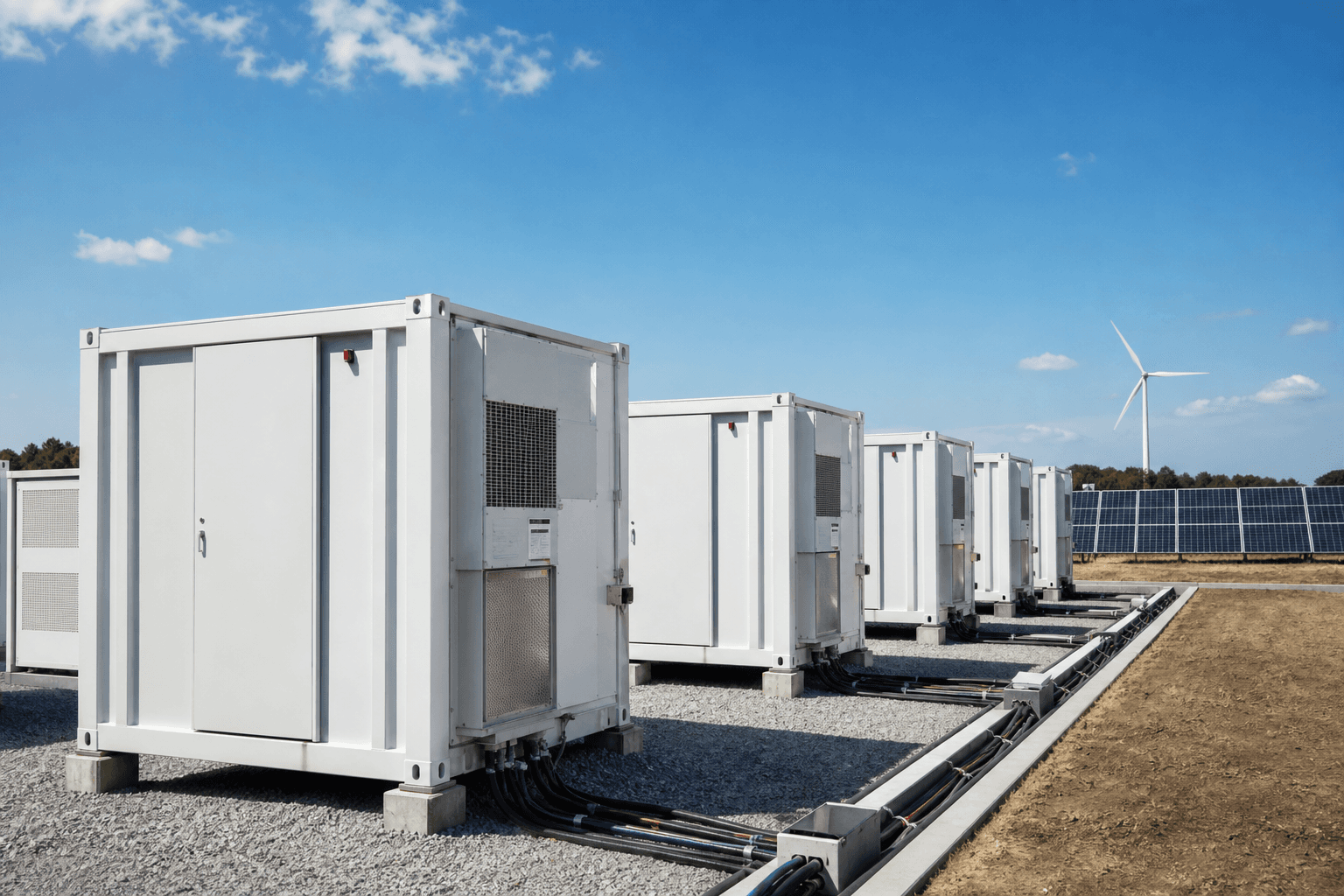
Solar-only plants all produce at the same time. As Malaysia’s midday solar share grows, the marginal value of another megawatt at noon falls, while the system’s need for controllable, grid-friendly capacity rises. Storage is how a bid differentiates itself:
- Deliver energy into the evening peak instead of only at midday
- Ride through export constraints without losing revenue
- Offer the system operator predictable, controllable output
- Future-proof the asset for ancillary and grid-support opportunities
Sizing the BESS: power, energy and duration
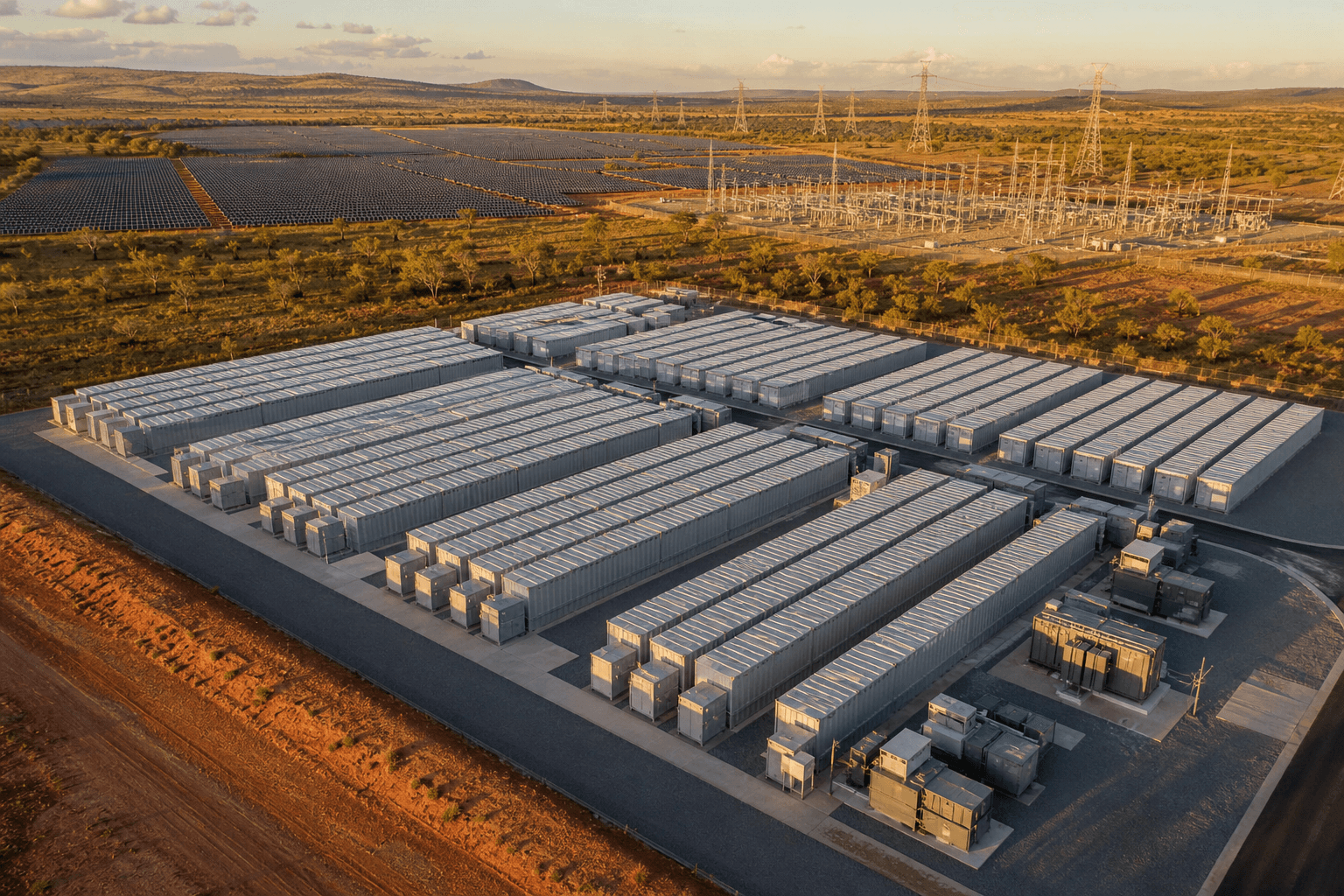
BESS sizing is a business decision expressed in engineering. The power rating (MW) sets how hard the plant can shift or smooth output; the energy rating (MWh) sets for how long. Co-located systems in this region typically land between one and four hours of duration, depending on what the storage is for — ramp control needs minutes, evening shifting needs hours.
The right answer comes from modelling the site’s solar profile, the grid connection limit, curtailment risk and the tariff structure — not from copying another project’s ratio. Oversizing wastes capex; undersizing leaves grid-code duties and revenue on the table.
DC-coupled vs AC-coupled architecture
DC-coupled designs share inverters between solar and storage, capture clipped energy efficiently and suit tightly integrated new builds. AC-coupled designs keep the BESS on its own PCS, which simplifies retrofits, phased construction and independent operation of the battery.
Neither is universally better. The choice follows from the plant layout, the interconnection limit, whether storage is built day-one or added later, and how the EMS must dispatch the combined asset. This is exactly the kind of decision an experienced integrator models before the bid is priced — because changing it after financial close is expensive.
Grid-code duties a BESS can carry
Utility-scale plants in Malaysia must behave as good grid citizens. A properly integrated BESS helps the plant meet its obligations with margin:
- Ramp-rate control — smoothing cloud-driven swings in output
- Frequency response — fast injection or absorption when system frequency moves
- Voltage and reactive power support at the point of interconnection
- Dispatch instructions — following the system operator’s setpoints reliably
- Black-start and islanding capability where specified
The economics: what storage does to a bid
Storage adds capex — so it must earn its place. In practice it does so through avoided curtailment, higher-value delivery windows, reduced balancing risk and stronger compliance headroom, all of which support a more confident tariff. Just as importantly, it protects downside: a plant that cannot meet its grid duties faces penalties and operational restrictions that erode returns for twenty years.
The bankability effect is real. Lenders discount uncertainty; a storage design with proven LFP chemistry, tier-one PCS, credible warranties, degradation modelling and a monitoring-backed O&M plan reduces that uncertainty — which shows up in financing terms.
Safety, warranties and long-term performance
At utility scale, BESS safety is a financing condition. Expect scrutiny of cell chemistry and provenance, BMS protection layers, thermal management, fire detection and suppression, spacing and access design, and emergency response planning — aligned with recognised international practice for battery installations.
Performance over 20+ years depends on operating discipline: state-of-charge management, thermal control, firmware currency, warranty compliance and planned augmentation as cells age. That is an O&M capability, and bids that show it win trust.
How Solunar supports LSS6-era storage design
Solunar provides the storage layer behind competitive bids: feasibility and sizing studies, battery supply across BYD, EVE and GoodWe platforms, PCS and EMS architecture, DC/AC coupling analysis, safety and compliance documentation, and long-term O&M with cloud monitoring. EPCCs and developers keep the client relationship and the plant; we make the storage part bankable.
BESS in an LSS6 bid — the essentials:
- Duration follows purpose: minutes for ramp control, hours for evening shifting
- DC vs AC coupling is a project-specific decision — model it before pricing the bid
- A BESS carries grid-code duties: ramp, frequency, voltage and dispatch
- Storage economics work through avoided curtailment, higher-value delivery and reduced risk
- Safety and O&M credibility are financing conditions, not afterthoughts
Frequently Asked Questions
There is no universal ratio. Sizing follows the site’s solar profile, grid connection limit, curtailment risk and revenue structure — co-located systems commonly range from one to four hours of duration, but the right answer comes from project-specific modelling.
DC coupling captures clipped solar efficiently and suits integrated new builds; AC coupling is more flexible for phased builds and retrofits. The best choice depends on layout, interconnection limits and dispatch strategy.
Storage adds capex but earns it back through avoided curtailment, higher-value delivery, compliance headroom and better financing terms. The comparison is not “solar vs solar + BESS cost” but “bid risk and revenue with and without storage”.
With LFP chemistry, disciplined operation and warranty-compliant O&M, utility-scale batteries are planned around 15–20+ year project lives, with capacity augmentation scheduled as cells age.
Related reading
Keep exploring — more from the Solunar Knowledge Centre:
Have a Solar + BESS project to discuss?
Solunar supports EPCC companies, developers and asset owners with technology, integration and O&M.