BESS for Large Scale Solar Projects
A BESS allows large-scale solar projects to store excess solar energy and release it later — making solar more dispatchable, grid-friendly and valuable to offtakers.
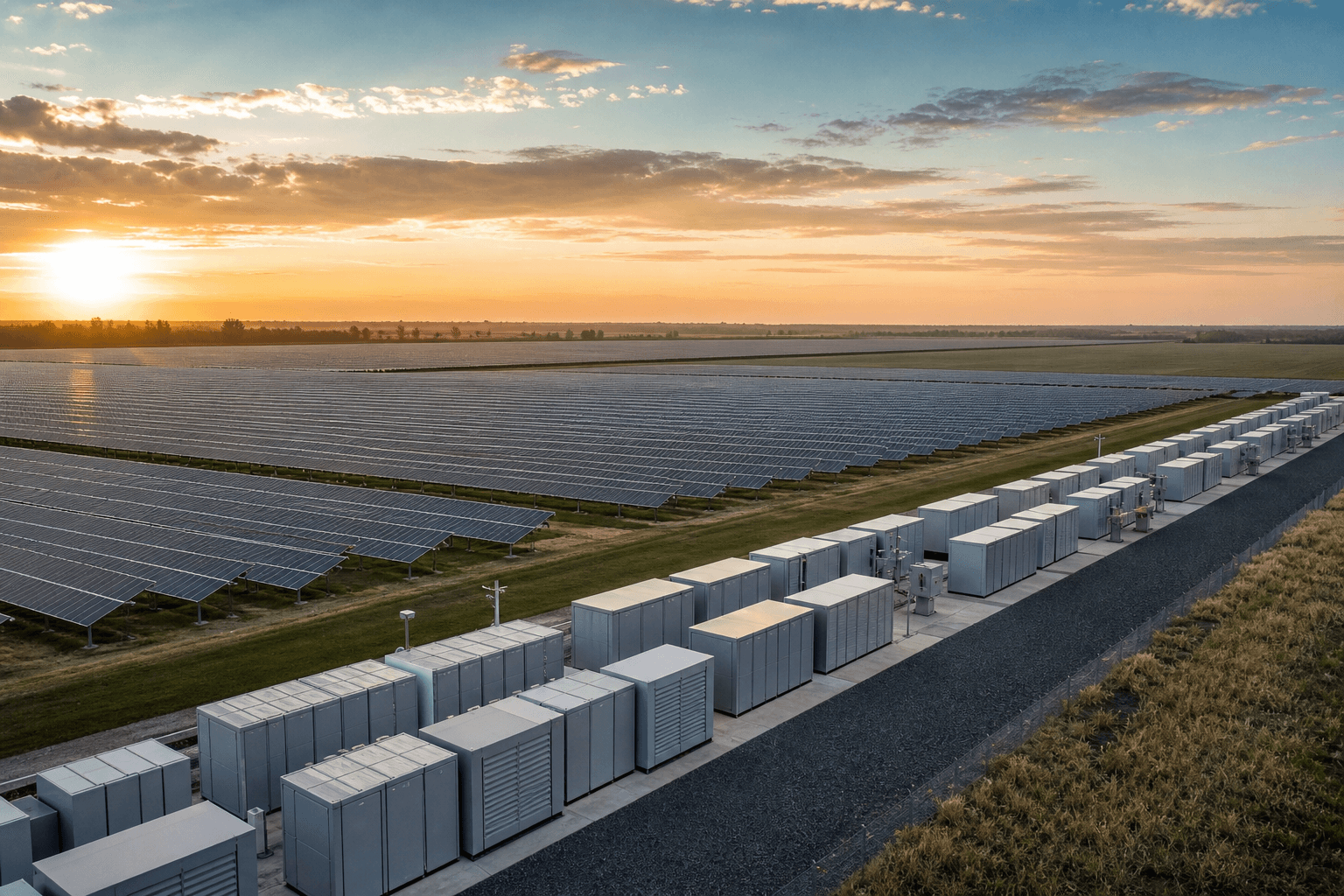
The problem with solar-only projects
A solar-only project depends on sunlight. When output is high the grid may not absorb all generation; when demand rises later, the farm may no longer produce at full capacity. This creates several issues:
- Solar intermittency and potential curtailment
- Grid connection constraints
- Lower dispatchability
- Reduced value during low-demand periods
- Difficulty matching corporate load profiles
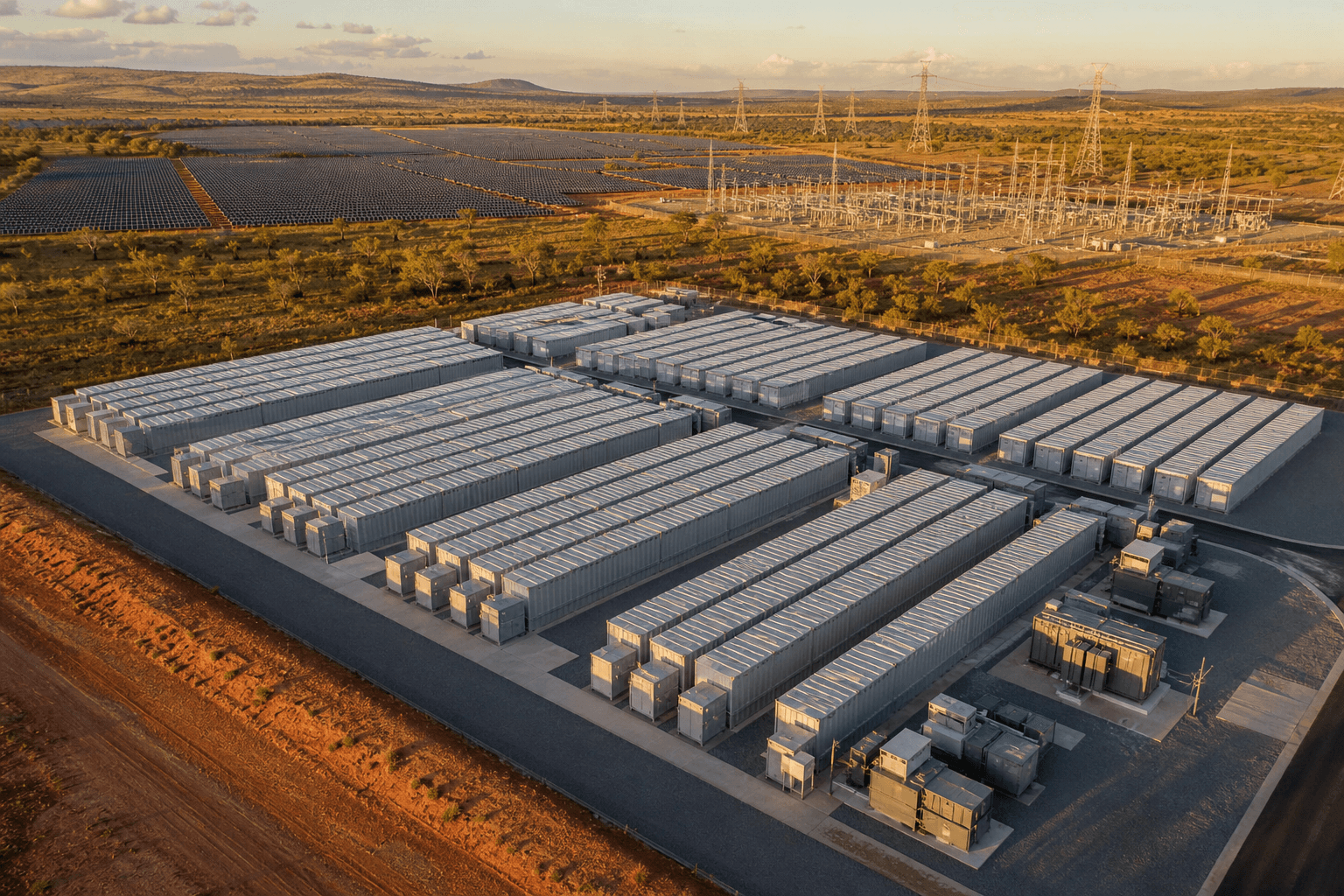
How BESS improves solar projects
During high generation the battery charges; during high demand or reduced output it discharges — making the project more useful to the grid and potentially more valuable to offtakers. BESS can support energy shifting, solar smoothing, peak delivery, frequency and voltage support, and backup or reserve functions. Malaysia’s Santong BESS project has been described as a large-scale "power bank" that stores excess electricity and releases it when required, helping stabilise grid frequency and reduce disruption risk.
Why this matters for developers
A solar + BESS project creates a stronger commercial proposition that may be more attractive to:
- Utilities and corporate offtakers
- Data centres and industrial parks
- Infrastructure funds
- Banks and project financiers
- Government-linked energy programmes
Key components of a solar + BESS system
A utility-scale solar + BESS project normally includes solar PV modules, inverters, battery containers, PCS, EMS, transformers and switchgear, SCADA and monitoring, fire protection and grid-connection infrastructure. The EMS is especially important because it controls when the battery charges, discharges and responds to grid or commercial requirements.
Frequently Asked Questions
BESS improves dispatchability, reduces curtailment exposure and supports grid requirements, making the project more valuable.
It controls when the battery charges, discharges and responds to grid or commercial signals.
It can be, because it strengthens the technical and commercial profile of the project.
Related reading
Keep exploring — more from the Solunar Knowledge Centre:
Have a Solar + BESS project to discuss?
Solunar supports EPCC companies, developers and asset owners with technology, integration and O&M.