What Is a PCS and Why Is It Critical in Energy Storage?
A Power Conversion System (PCS) converts energy between the DC power of a battery and the AC power of the grid or load, and controls how that power flows in a battery energy storage system.
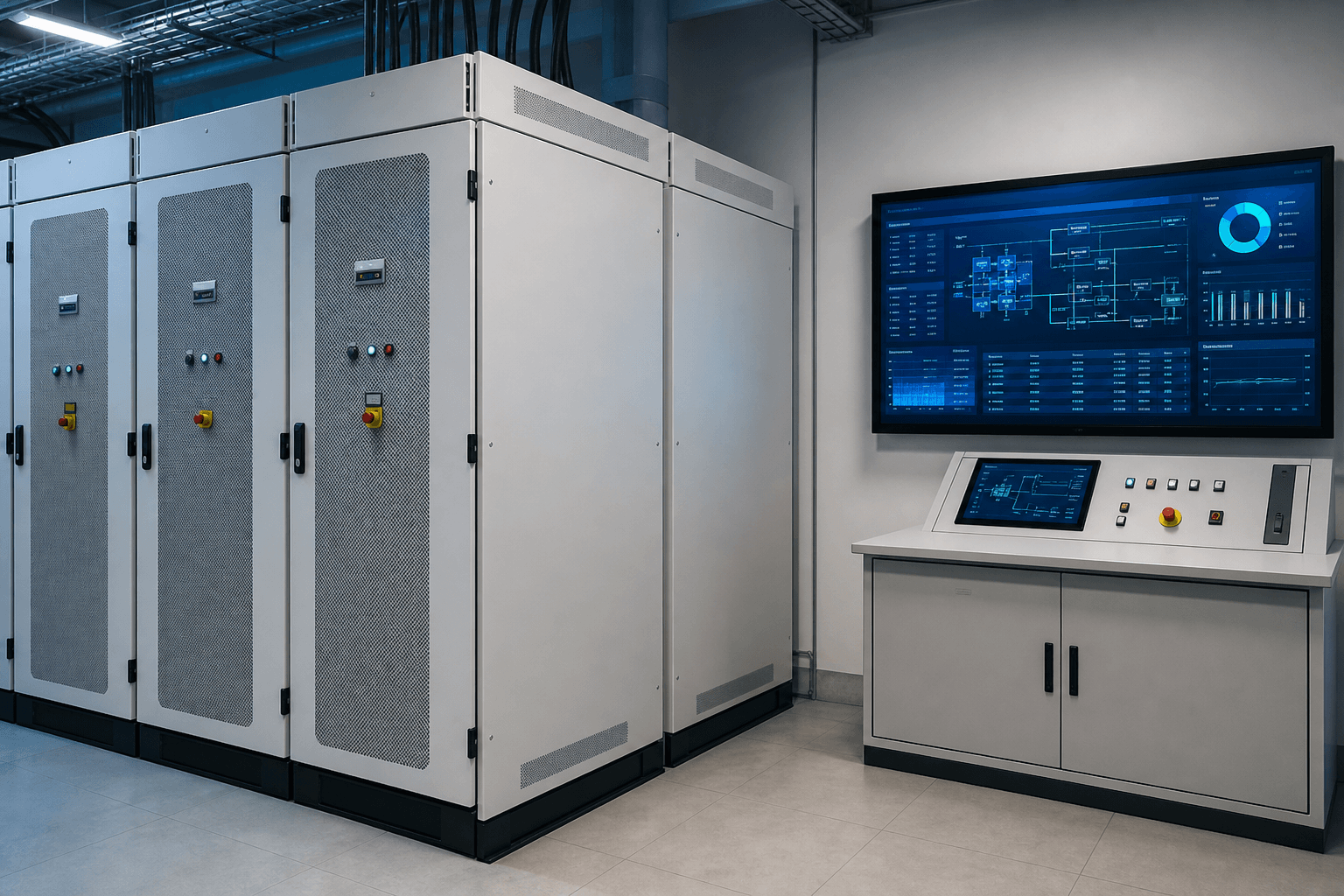
What does a PCS do in a BESS?
The PCS sits between the battery and the grid or load. It converts DC to AC when discharging, AC to DC when charging, and continuously manages the direction, magnitude and quality of power flow according to instructions from the EMS.
Because it governs conversion and flow, the PCS effectively decides how quickly and how cleanly the battery can respond — making it central to both performance and grid compliance.
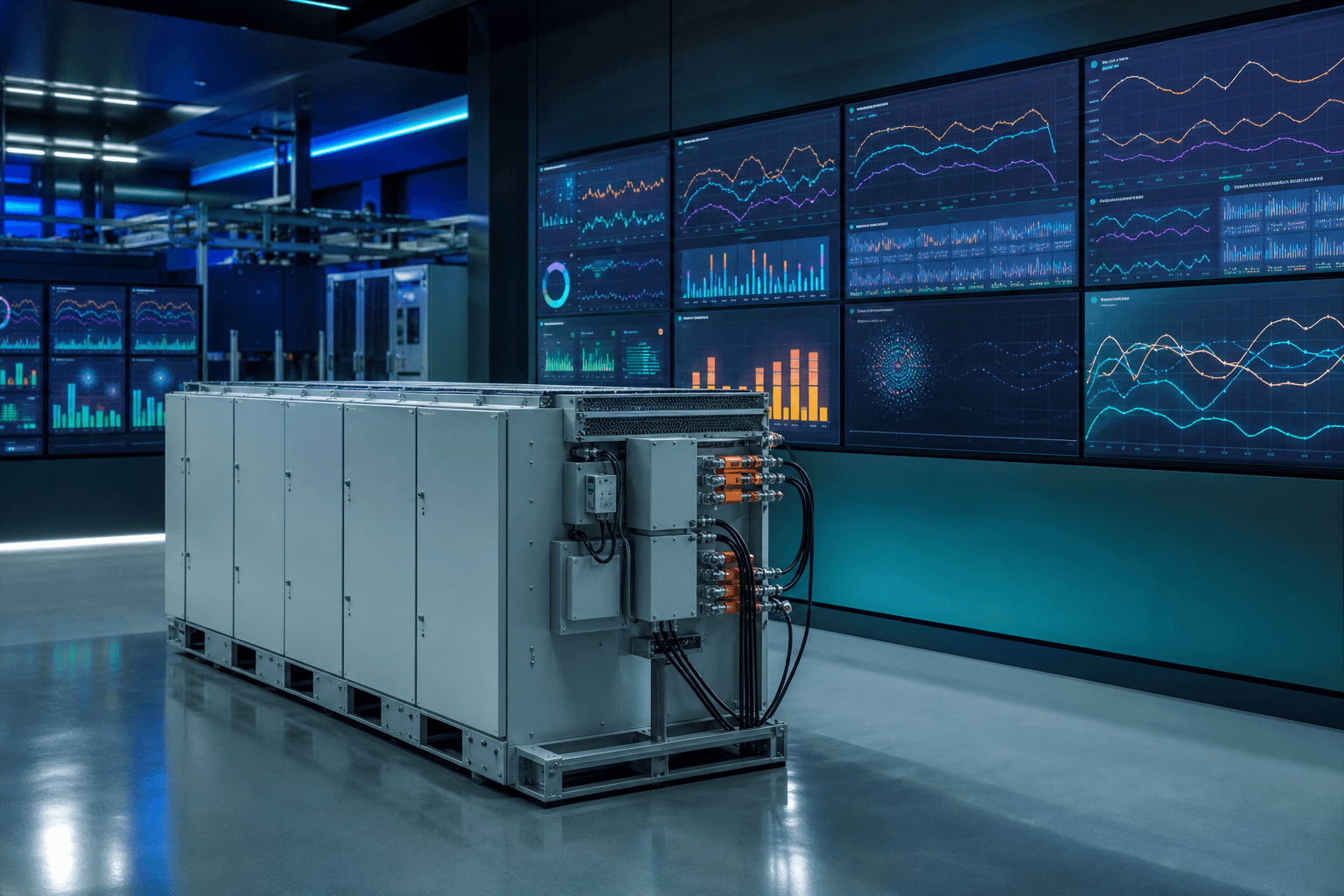
Why does the PCS choice affect project economics?
The wrong PCS choice affects round-trip efficiency, response time, reliability and grid compatibility — all of which feed directly into a project’s savings and bankability. A few percentage points of efficiency, compounded over years of cycling, is real money.
PCS selection also determines whether the system can deliver functions like ramp-rate control, reactive-power support and fast frequency response, which can be required for grid-connected and utility-scale projects.
Is a PCS the same as a solar inverter?
They are related but not identical. A solar inverter converts DC from PV to AC in one direction; a PCS is bidirectional and built to charge and discharge a battery under active control. In some hybrid designs a single device handles both roles.
Frequently Asked Questions
PCS power rating is matched to the battery capacity, the discharge duration and the application — for example, peak shaving versus longer-duration shifting. Solunar sizes the PCS alongside the battery and EMS for the project objective.
Yes. In a Solar + BESS system the PCS coordinates power between the battery, the solar PV, the grid and the site load, under the EMS control strategy.
Related reading
Keep exploring — more from the Solunar Knowledge Centre:
Have a Solar + BESS project to discuss?
Solunar supports EPCC companies, developers and asset owners with technology, integration and O&M.