Commercial & Industrial BESS in Malaysia: Complete Guide
Commercial & Industrial BESS (C&I BESS) refers to battery energy storage systems designed for businesses and industrial facilities — storing electricity and releasing it when the business needs power, connected to solar, the grid, or both.
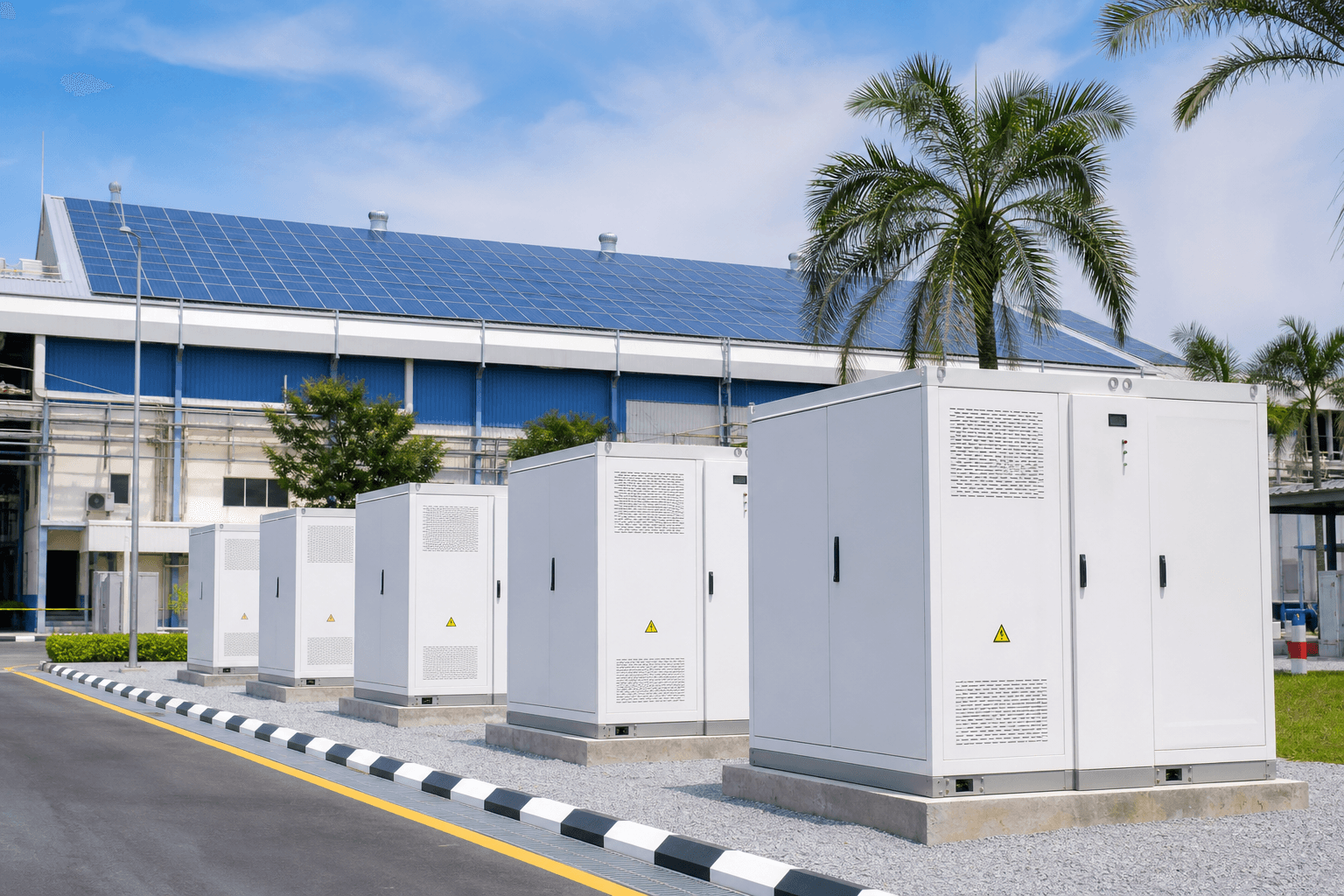
Why Malaysian businesses are looking at BESS
Electricity bills are becoming a major operating cost. Production facilities experience demand spikes from machinery, chillers, compressors, pumps and motors; some companies want to expand but are limited by grid capacity; others have solar but cannot fully maximise its value. BESS gives businesses more control by using stored electricity strategically instead of only buying from the grid when demand happens.
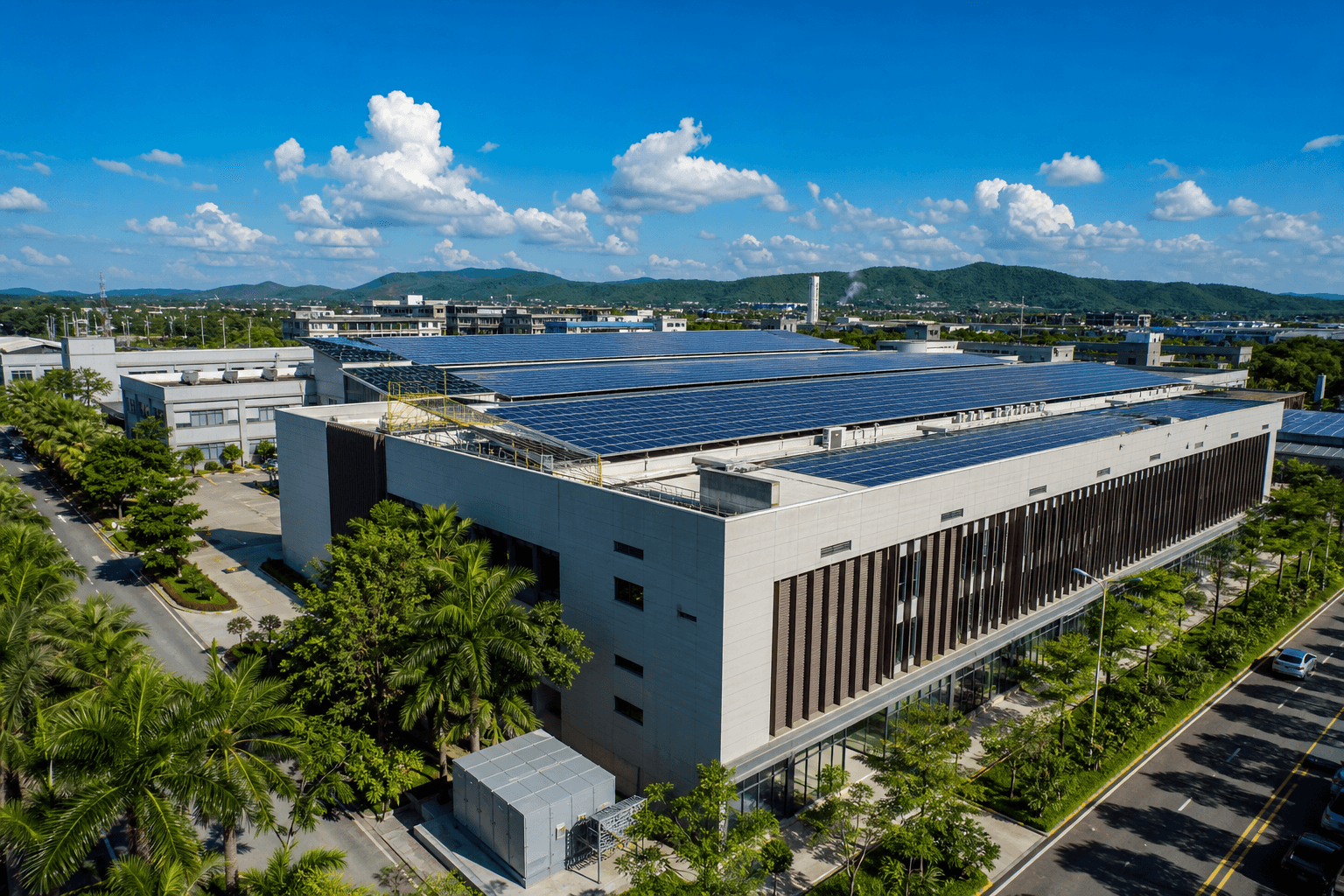
Where C&I BESS is deployed
C&I BESS is installed at sites such as:
- Factories and manufacturing plants
- Warehouses and logistics hubs
- Shopping malls and large retail
- Commercial buildings
- Cold storage facilities
- Data centres
- Industrial parks
Main benefits of C&I BESS
The biggest benefit is maximum demand peak shaving: many bills charge not only for total energy but for the highest power demand in the period, and a BESS can discharge during peaks to reduce that charge. BESS also improves solar self-consumption by storing excess solar for later, supports power expansion without an immediate grid upgrade, optimises energy cost through intelligent charge/discharge, and improves power reliability for facilities where continuity matters.
How C&I BESS works
A commercial or industrial BESS typically includes a battery system, PCS, EMS, transformer, switchgear, protection, cooling, fire safety and a cloud monitoring platform. The battery stores electricity, the PCS converts power between DC and AC, the EMS decides when to charge or discharge, and cloud O&M allows remote monitoring. The goal is not just to install batteries — it is to create an intelligent energy system that supports the business.
Who should consider C&I BESS?
C&I BESS is suitable for businesses with:
- High maximum demand charges
- Large electricity bills
- Solar PV systems
- High daytime and evening power usage
- Frequent demand spikes
- Grid capacity limitations
- A need for power reliability
- Expansion plans, or ESG / net-zero targets
Why system integration matters
A successful project depends on more than battery capacity. The system must be correctly sized, engineered, integrated, monitored and maintained — answering questions about load profile, maximum demand pattern, existing solar, grid capacity, target saving, discharge duration, safety standard, monitoring and O&M. This is why businesses need a BESS system integrator, not only a battery supplier.
Frequently Asked Questions
It is a battery energy storage system designed for factories, commercial buildings and industrial facilities.
BESS can reduce maximum demand charges, improve solar self-consumption and optimise energy usage.
Yes — for factories with high electricity bills, demand spikes, solar PV systems or power-expansion needs.
Yes. BESS can be used with grid electricity even without solar, especially for peak shaving and load management.
Related reading
Keep exploring — more from the Solunar Knowledge Centre:
Have a Solar + BESS project to discuss?
Solunar supports EPCC companies, developers and asset owners with technology, integration and O&M.